
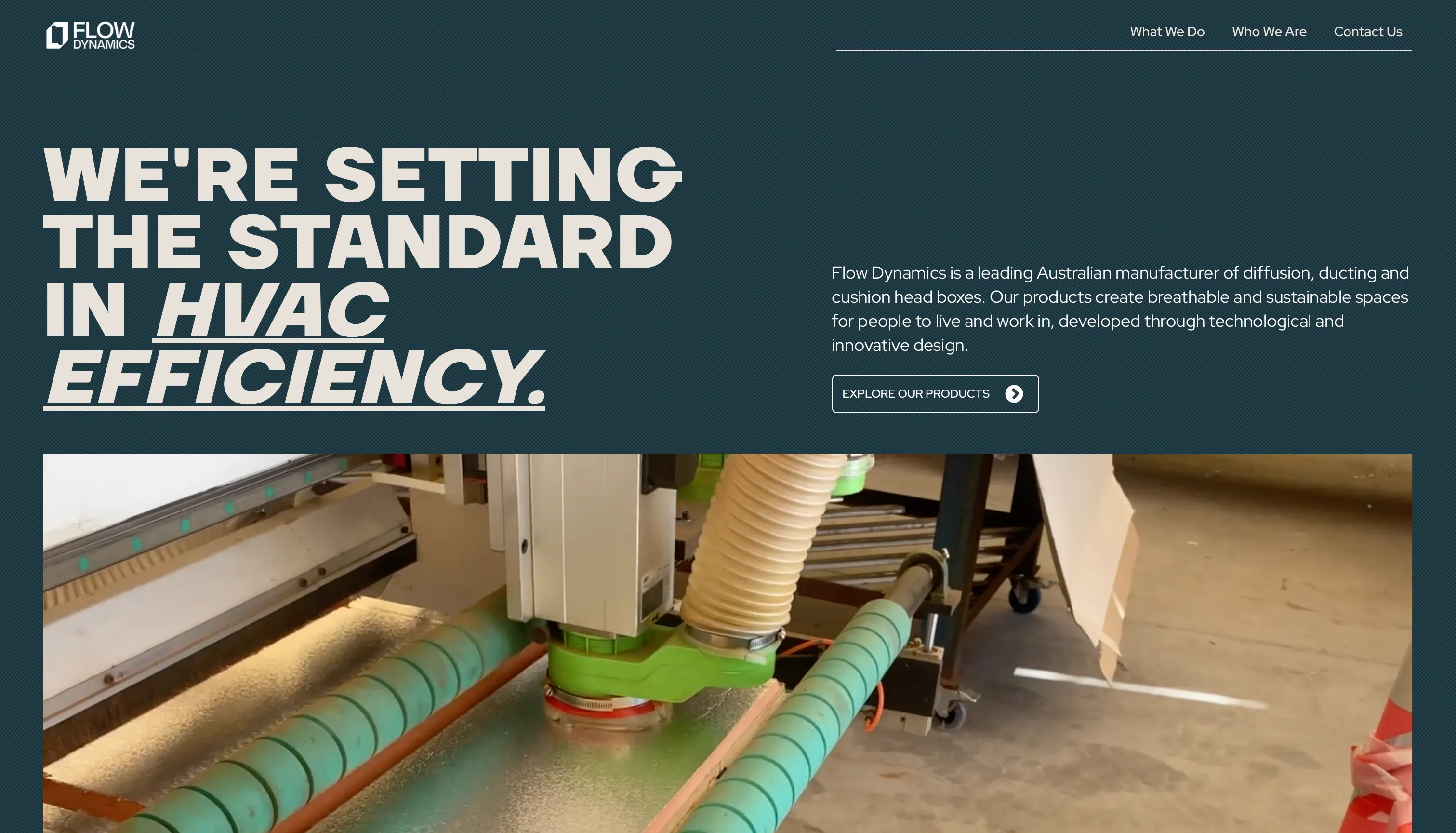
Website Design for HVAC Businesses — Air Conditioning and Heating Websites
Air conditioning and heating customers fall into two camps — the homeowner whose system just died in 40-degree heat, and the one spending weeks comparing split systems before a summer install. Your website needs to convert both, and it needs to do it at different times of year with different messaging. We build HVAC websites around the seasonal, research-heavy reality of how people actually buy heating and cooling.
Let's Chat










Content timing and the seasonal demand curve
HVAC is arguably the most seasonal trade in Australia. Split system installations spike from October to December as homeowners rush to beat summer. Ducted system enquiries follow new build timelines year-round but peak when people move into homes without adequate cooling. Emergency repair calls surge during the first extreme heat event of summer and the first cold snap in winter. Your website needs to be ready for each of these waves before they arrive, not after.
We build HVAC websites with a seasonal content architecture. Dedicated landing pages for summer installation, winter heating, and pre-season servicing are created, indexed, and ranking well before peak demand hits. Your homepage messaging shifts to match what customers are actively searching for — air conditioning installation in October, heating system checks in April, emergency repair availability during extreme weather events. This is not cosmetic. A page that starts ranking in August for "split system installation [suburb]" captures the October demand. A page built in November is too late — it will not rank until the season is over.
Pre-season servicing pages deserve particular attention. A dedicated page promoting air conditioning maintenance in September or heating checks in March attracts the most valuable segment of your customer base — organised homeowners who maintain their systems and become repeat annual clients.
Energy ratings, running costs, and the research-heavy buyer
HVAC customers are among the most research-intensive consumers in any trade sector. Before they call an installer, they spend hours comparing energy star ratings, calculating running costs, reading reviews of specific models, and checking whether government rebates apply to their purchase. Your website can either be part of that research journey or invisible during it.
We build comparison content that matches this research behaviour. Pages covering energy efficiency ratings across system types — what a 3.5-star split system actually costs to run versus a 5-star model, how inverter technology affects power consumption, and what the real-world difference is between a ducted system and a multi-split setup in a four-bedroom home. State-specific rebate information is woven into the relevant pages — the Victorian Energy Upgrades program, NSW Energy Savings Scheme, or South Australia's retailer obligation scheme. Customers searching for "heat pump rebate Victoria" or "energy efficient air conditioning" are in the late stages of their decision. A page that gives them clear, accurate answers and then offers a quote form is converting a customer who has already decided to buy.
An HVAC installer in Melbourne's southeast had a clean, professional website but almost no content beyond a services list. We built comparison pages covering split system versus ducted, energy efficiency ratings for popular models, and a VEU rebate guide for heat pump hot water systems. Those three pages now account for over 40 percent of the site's organic traffic and generate an average of twelve quote requests per month from customers who arrive already informed and ready to proceed.
Brand partnerships and authorised dealer status
Daikin, Mitsubishi Electric, Fujitsu, Samsung, Actron Air — each of these brands has its own loyal customer base and its own search volume. A homeowner who has decided they want a Daikin split system is not searching "air conditioning installer." They are searching "Daikin installer near me" or "Daikin authorised dealer [suburb]." If you hold authorised dealer status with one or more major brands, your website should be capturing these searches.
We build brand-specific pages for each manufacturer partnership you hold. These pages display your authorisation credentials, cover the specific models you supply and install, and include any extended warranty benefits that come with using an authorised installer. Each page targets brand-plus-location search terms that your competitors without dealer status simply cannot rank for. Your ARCTick licence number and refrigerant handling credentials appear on these pages alongside brand logos, reinforcing that you are both factory-authorised and properly licensed. For HVAC businesses with multiple brand partnerships, this page structure can generate a significant volume of high-intent traffic from customers who have already chosen their brand and just need a qualified local installer.
Separating commercial and residential pathways
A facilities manager sourcing quotes for a commercial VRV system and a homeowner wanting a split system in the bedroom are not the same audience. They have different budgets, different decision-making processes, different timelines, and different evaluation criteria. A facilities manager wants to see commercial project experience, maintenance contract capability, and evidence that you can service multi-unit systems. A homeowner wants to see brands, pricing guidance, and customer reviews.
We build HVAC websites with distinct pathways for each audience when your business serves both markets. Commercial sections feature project portfolios showing office fit-outs, retail installations, and warehouse climate control. They emphasise your capacity for planned maintenance contracts, system design and engineering consultation, and multi-site servicing capability. Residential sections focus on product selection, installation process, and the personal service experience. The two pathways share a common design language but speak to their respective audiences in the language those audiences use. A body corporate searching for a commercial HVAC contractor should never have to scroll past split system pricing guides to find what they need.
Maintenance plans and recurring revenue
The most profitable HVAC businesses are not the ones chasing new installations every month. They are the ones with hundreds of annual maintenance contracts generating predictable revenue year after year. But most HVAC websites treat maintenance as an afterthought — a single line item on the services page that says "we also do servicing."
We build dedicated maintenance and service plan pages that convert one-off installation customers into ongoing annual clients. These pages explain what a maintenance visit involves, how often systems should be serviced, what happens when filters are not cleaned and coils are not checked, and the warranty implications of skipping manufacturer-recommended servicing. We include simple pricing structures for annual plans — single split system, multiple systems, ducted system, commercial — so the customer can see the cost before they enquire. A well-built maintenance page serves as both a conversion tool for new clients and a reference point your team can send to existing customers when following up after an installation. The maths is straightforward: an HVAC business with 200 maintenance contracts at $180 each has $36,000 in guaranteed annual revenue before answering a single new enquiry.
Ready to get more leads for your hvac business?
Get in touch to discuss your project. We'll show you what a high-performing website looks like for your industry.
Let's ChatCommon questions about hvac websites
How much does an HVAC website cost?
Our website packages for HVAC businesses start from $5,000 AUD. This includes a mobile-first design, lead capture forms, service pages for each system type, and local SEO setup.
Can customers request a quote for air conditioning installation online?
Yes. We build quote request forms into every HVAC website. Customers can describe their space, select the type of system they are interested in, and provide contact details for follow-up.
Do you create separate pages for different HVAC services?
Absolutely. We build individual pages for split system installation, ducted air conditioning, heating systems, maintenance and servicing, repairs, and commercial HVAC. This helps with both user experience and Google rankings.
How do you help HVAC businesses rank on Google?
Every site includes on-page SEO, local keyword targeting, Google Business Profile optimisation, and suburb pages. We target searches like 'air conditioning installation [suburb]' and 'heating repair near me' to drive local leads.
Can the website handle emergency repair enquiries?
Yes. We include prominent click-to-call buttons and emergency contact options so customers with urgent breakdowns can reach you immediately.